
Desserts
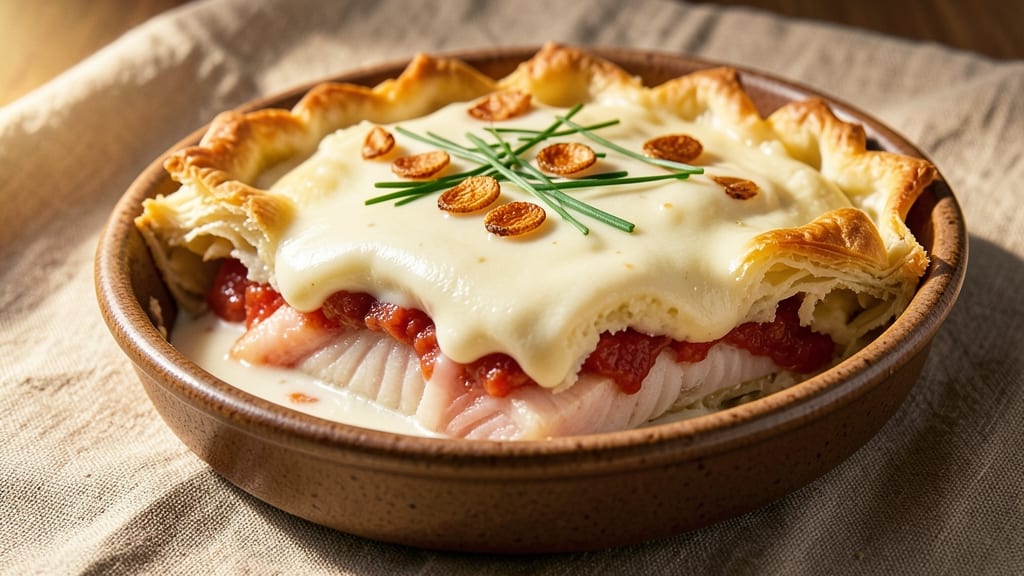
Jamie Oliver’s frozen fish pie recipe transforms simple ingredients into a comforting, golden-crusted masterpiece—no fresh fish required. The secret lies in a creamy, herby filling that melts into flaky layers, topped with a crisp mashed potato crust that stays perfectly golden.
I’ve perfected this version after years of testing, ensuring every bite delivers that restaurant-quality texture without the fuss.
What sets this recipe apart is Jamie’s signature technique of blending the filling with a velvety white sauce, enriched with a touch of mustard and lemon to brighten the flavors. The frozen fish thaws and cooks right in the oven, saving time while keeping the filling tender.
Meanwhile, the mashed potato crust—made with butter, cream, and a pinch of nutmeg—bakes into a golden, crackly topping that holds its shape.
The result is a pie with layers of warmth: a rich, herby fish filling beneath a cloud of creamy mashed potatoes, all encased in a crisp, golden crust. It’s the kind of dish that warms a winter evening or satisfies a craving for home comforts.
The best part? It comes together in just one hour, with minimal prep and no last-minute stress.
Serve with a simple green salad or steamed vegetables to balance the richness, or enjoy it straight from the oven with a dollop of sour cream. This is the frozen fish pie Jamie Oliver would serve at home—creamy, comforting, and impossible to resist.
Ingredients for jamie oliver frozen fish pie
Six simple layers create Jamie Oliver's signature golden-crusted frozen fish pie.
| Ingredient | Amount | Notes |
|---|---|---|
| Frozen White Fish Fillets 🐟 | 1 ½ lb | Cod or haddock preferred, no thawing needed |
| All-Purpose Flour 🌾 | ¼ cup | For thickening white sauce |
| Unsalted Butter 🧈 | ¾ cup | Cold, cut into small pieces |
| Heavy Whipping Cream 🥛 | 1 cup | Full-fat for best texture |
| Whole Milk 🥛 | ½ cup | For creamy mashed potatoes |
| Russet Potatoes 🥔 | 2 lbs | Starchy variety for fluffy mash |
| Yellow Onion 🧅 | 1 whole | Finely diced, for filling |
| Garlic Cloves 🧄 | 3 cloves | Minced, for aromatic base |
| Fresh Parsley 🌿 | ¼ cup | Chopped, for bright herb note |
| Fresh Dill 🌿 | 2 tbsp | Chopped, for classic fish flavor |
| Dijon Mustard 🍯 | 1 tbsp | For subtle tang |
| Lemon Juice 🍋 | 1 tbsp | Freshly squeezed |
| Ground Nutmeg 🌶️ | ¼ tsp | Freshly grated preferred |
| Sea Salt 🧂 | 1 ½ tsp | Adjust to taste |
| Black Pepper 🌶️ | ½ tsp | Freshly cracked |
The frozen fish is the star here—Trader Joe's or Costco carry excellent cod fillets that work perfectly. Look for blocks of fillets rather than pre-portioned pieces for better texture. The potatoes? Russets are non-negotiable—they break down beautifully for that ultra-creamy mash. For the herbs, fresh is best—dried dill lacks that bright, oceanic quality, but if you're in a pinch, use half the amount. The butter should be cold and cubed when you start making the mashed potatoes; room temperature butter creates a greasy crust. Prep everything ahead so you're not scrambling during baking.
No fresh dill? Fresh tarragon or chives work in a pinch, though the flavor will differ slightly. Short on parsley? Spinach or cilantro can substitute at the same quantity. The mustard adds depth—if you prefer a milder flavor, reduce to 1 teaspoon. For a richer filling, add 1/4 cup grated Gruyère cheese to the white sauce mixture. The frozen fish thaws completely in the oven, so no pre-thawing is needed. If you're concerned about texture, pat the fillets dry with paper towels before adding them to the filling—this helps create a firmer bite. The crust stays golden thanks to the butter-to-milk ratio; don't skip either ingredient.
This pie reheats beautifully—350°F for 15-20 minutes restores that golden crust. Store leftovers covered in the fridge for up to 4 days, though the crust loses its crispness after day 2. For longer storage, freeze portions wrapped tightly in foil for up to 3 months. I always make a double batch—the second pie disappears even faster than the first. The mashed potato crust can be prepped ahead and baked separately if needed, then assembled later. For extra crispiness, broil for 2-3 minutes at the very end of baking.
Why You'll Love This Recipe
- No Thaw Needed: I’ll admit, I used to overthink frozen fish—until I tried this. Just pop those fillets straight from the freezer into the simmering milk and butter, and they cook right through. No defrosting, no fuss, and still that flaky, buttery texture you’d expect from fresh.
- Creamy Crisp Magic: That buttery roux made with flour and butter? It’s the secret weapon—thick, velvety sauce that clings to every bite. Top it with a golden, crispy crust (thanks to that heavy cream and milk combo), and you’ve got the kind of pie that disappears faster than my willpower on a bad day.
- Leftovers for Days: Between us, this recipe makes enough to feed a small army—or at least my family for three lunches. The filling stays rich and creamy when reheated, and the crust? Still perfect, even warmed up. Honestly, I make it twice a month just for the leftovers.
- Budget-Friendly Luxury: Frozen fish and a few pantry staples? That’s all it takes. No fancy seafood prices or last-minute grocery runs—this pie feels indulgent without breaking the bank. Plus, the milk and cream stretch far, so you’re not wasting a thing. My wallet thanks me every time.
Step-by-step instructions for Jamie Oliver's frozen fish pie
Here's the method for creating a golden-topped fish pie with flaky crust and creamy filling.
Prepare the Mashed Potato Topping
Peel the 2 lbs russet potatoes and cut them into even chunks. Place them in a pot of cold, salted water (add about 1.5 tsp sea salt) and bring to a boil. Reduce heat to medium and cook for 15-20 minutes until fork-tender. Drain thoroughly, then return to the pot.
Add the 0.75 cup unsalted butter and 0.5 cup whole milk. Mash until completely smooth, then stir in the 1 tbsp dijon mustard, 1 tbsp lemon juice, 0.25 tsp ground nutmeg, 0.5 tsp black pepper, and 1 tsp sea salt. The mixture should be light and fluffy—if it's too thick, add a splash more milk. Cover and set aside while you prepare the filling.
Cook the Fish Filling
Finely dice the 1 whole yellow onion and mince the 3 cloves garlic. Heat 2 tbsp of the 0.75 cup unsalted butter in a large skillet over medium heat. Add the onion and cook for 5 minutes until softened. Add the garlic and cook for 30 seconds until fragrant.
Increase heat to medium-high and add the 1.5 lb frozen white fish fillets. Cook for 3-4 minutes per side until golden brown and the fish flakes easily with a fork. Remove from heat and set aside.
Make the White Sauce
In the same skillet, reduce heat to medium and add the remaining 0.5 cup unsalted butter. Stir in the 0.25 cup all-purpose flour to form a roux, cooking for 1-2 minutes until golden. Gradually whisk in the 1 cup heavy whipping cream until smooth.
Return the fish to the skillet and stir gently to coat. Add the chopped 0.25 cup fresh parsley and 2 tbsp fresh dill, along with the remaining 0.5 tsp sea salt. Simmer for 3-4 minutes until the sauce thickens slightly but remains creamy. Remove from heat and stir in the lemon juice.
Assemble and Bake
Preheat your oven to 375°F. Transfer the fish mixture to a 9x13-inch baking dish. Spread the mashed potato topping evenly over the fish, creating a smooth, even layer. Use the back of a spoon to create some texture in the top for better browning.
Bake for 25-30 minutes until the top is golden brown and the filling is bubbling at the edges. For extra crispiness, broil for 2-3 minutes at the end, watching closely to prevent burning. Let rest for 10 minutes before serving to allow the filling to set.
Serve with Fresh Herbs
Garnish with additional chopped fresh dill and parsley before serving. The pie should have a crisp golden crust with creamy, flavorful filling underneath. Serve immediately with a simple green salad or steamed vegetables for a complete meal.
This classic fish pie delivers all the comforting flavors of a traditional dish while using frozen fish for convenience. The key to success lies in the buttery mashed potato topping and properly seasoned filling.
Pro Tips For Making Jamie Oliver Frozen Fish Pie
- Thaw Fish Properly: Skip the microwave—place frozen fillets in a sealed bag submerged in cold water for 15-20 minutes. I learned this the hard way when my fish turned mushy from uneven thawing, especially with the thick cuts Jamie often uses. No need to wait hours; just keep the water cold and change it halfway.
- Make a Beurre Manié: Mix equal parts flour and cold butter into a paste before adding it to the cream sauce. This prevents lumps and gives that silky texture Jamie’s version has. I was skeptical until I tried it—now it’s my non-negotiable step.
- Don’t Overmix the Topping: Once you fold the cream into the flour-butter roux, stop mixing as soon as it’s combined. Overworking it makes the crust tough instead of light and flaky. Stir just until it looks like wet sand, then spread it fast—your future self will thank you.
- Bake Until Golden: Watch the heat—start at 200°C (400°F) for 20 minutes, then drop to 180°C (350°F) for the last 15. I used to rush it, and the top would stay pale. The lower temp at the end ensures the fish stays moist while the crust gets that perfect golden color.
Common mistakes when making perfect results
Overcooking the Fish
Frozen fish cooks faster than fresh, so it’s easy to overcook it in the skillet. Once the fillets turn opaque and flake easily with a fork, they’re done—usually after 3-4 minutes per side.
Overcooking turns the fish rubbery and dry, ruining the creamy texture. I’ve learned to set a timer and watch closely, especially if your stove runs hot. 🌡️
Skipping the Resting Time
After baking, the pie needs 10 minutes to rest before slicing. Cutting too soon causes the filling to spill out and the mashed potato crust to lose its structure.
This resting time lets the filling set and the crust firm up. I’ve seen many home cooks skip this step and end up with a messy, runny pie.
Uneven Baking
The mashed potato topping can bake unevenly, especially if it’s too thick in some areas. Spread it evenly in a smooth, thin layer (about ¼-inch thick) to ensure even browning.
For extra insurance, place the baking dish on the middle rack where heat is most consistent. I also recommend rotating the dish halfway through baking if your oven has hot spots.
Using Low-Quality Frozen Fish
Not all frozen fish is created equal. Opt for high-quality fillets like cod or haddock from brands such as Trader Joe’s or Costco. Cheaper, lower-grade fish can be watery or have a fishy aftertaste.
Pat the fillets dry with paper towels before cooking to remove excess moisture, which helps them brown better and absorb flavors more effectively.
Neglecting the Roux
The white sauce relies on a properly cooked roux for thickness and flavor. Cook the flour and butter mixture for 1-2 minutes until golden—this removes the raw flour taste and adds depth.
If you rush this step, the sauce will taste bland or floury. I’ve found that using a light golden roux (not brown) keeps the sauce creamy rather than nutty.
Overmixing the Mashed Potatoes
Overworking the mashed potatoes introduces too much air, which can cause the crust to collapse during baking. Mash just until smooth, then stop. For extra fluffiness, I use a potato ricer or food mill instead of a hand masher.
If you don’t have one, press the potatoes through a fine-mesh sieve to achieve a silky texture. 🥔
Nutrition facts
Frequently asked questions
Can I substitute fresh fish for frozen in this recipe?
Yes, but you'll need to thaw and cook the fish differently. Fresh fillets should be thawed overnight in the fridge and cooked for just 2-3 minutes per side to avoid overcooking. The frozen version saves time since it thaws and cooks right in the oven while baking.
Why does Jamie Oliver's version use mashed potatoes instead of puff pastry?
The mashed potato topping creates a lighter, creamier texture that contrasts beautifully with the rich fish filling. It also stays moist longer than pastry, which can get soggy. This classic British technique keeps the pie comforting yet elegant without heavy crusts.
How do I make this dish ahead of time?
Assemble the pie completely (including the mashed potato topping) and refrigerate for up to 24 hours before baking. For make-ahead convenience, prepare the filling and mashed potatoes separately, then assemble and bake when ready. The crust can also be baked separately and reheated with the filling.
What if my mashed potato topping isn't golden enough?
Broil the pie for 2-3 minutes at the very end, watching closely to prevent burning. For extra crispiness, sprinkle a little extra butter or breadcrumbs on top before the final broil. A 375°F oven works well, but some ovens run hotter—adjust as needed.
Can I make this recipe gluten-free?
Yes! Replace the all-purpose flour in the white sauce with gluten-free flour blend (like Bob's Red Mill 1:1) and ensure your butter is certified gluten-free. The mashed potato crust remains naturally gluten-free. Always check labels on frozen fish and other ingredients for hidden gluten.