Desserts
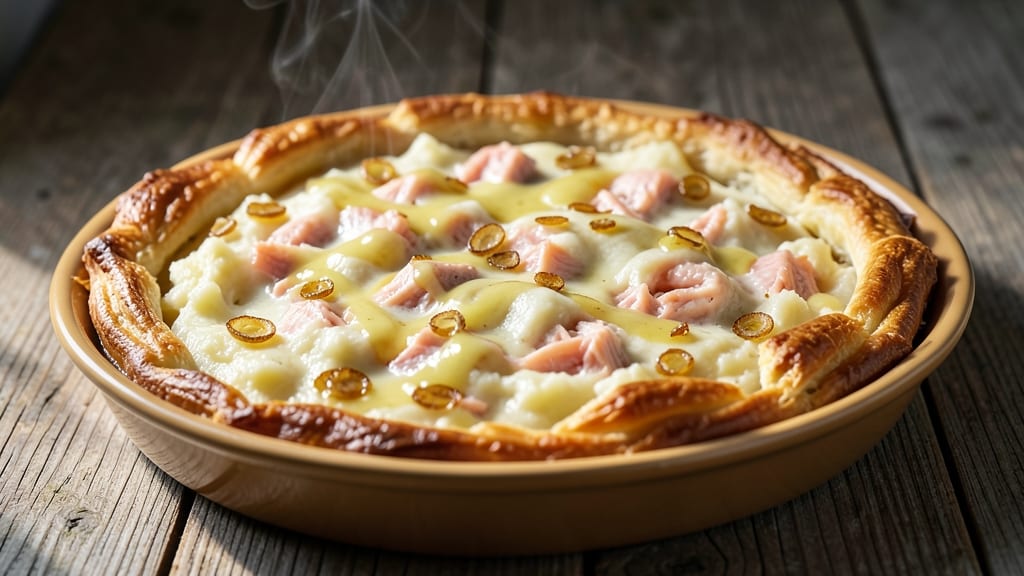
This canned salmon fish pie recipe transforms simple pantry staples into a comforting, creamy masterpiece with a flaky crust that rivals homemade.
After years of perfecting the balance between tender filling and golden-brown topping, I’ve developed a method that delivers restaurant-quality results without the fuss—ideal for pescatarian meals or cozy family dinners.
The secret lies in layering flavors: rich salmon, velvety mashed potatoes, and aromatic herbs, all encased in a buttery crust that’s crisp enough to hold its shape but tender enough to melt in your mouth.
The beauty of this recipe is its versatility—whether you’re using a store-bought crust for convenience or rolling out homemade dough for that extra touch of elegance, the filling does all the heavy lifting.
Canned salmon provides a budget-friendly, protein-packed base that holds up beautifully when baked, while the creamy potato layer ensures every bite is satisfying.
Seasoning is key here: just a pinch of nutmeg and a splash of lemon brighten the filling, while a sprinkle of paprika on the crust adds a subtle warmth that pairs perfectly with the salmon’s natural richness.
By the time it emerges from the oven, you’ll have a pie with a golden, flaky crust that shatters slightly at the edges and a filling so creamy and flavorful it disappears faster than you can say "second helping."
The aroma alone—warm, buttery, with hints of herbs and lemon—will have everyone at the table anticipating the first bite. This is the kind of dish that feels special without requiring hours of prep, making it perfect for weeknights or weekend gatherings when you want to impress without the stress.
Serve with a simple green salad or steamed vegetables to balance the richness, or let the pie stand alone as the star of the meal. The leftovers reheat beautifully, too, so you’ll have another satisfying dinner ready in minutes. Let’s get started—this pie is worth every moment of effort.
Ingredients for canned salmon fish pie
Simple pantry staples and fresh herbs transform into a creamy, flaky salmon pie masterpiece.
| Ingredient | Amount | Notes |
|---|---|---|
| Canned Salmon (with bones) 🐟 | 2 cans | Drained, bones removed |
| Russet Potatoes 🥔 | 2 ½ lbs | Peeled, boiled until tender |
| Heavy Cream 🥛 | 1 cup | Full-fat for creaminess |
| Whole Milk 🥛 | ½ cup | For smooth texture |
| Unsalted Butter 🧈 | ½ cup | Cold, cubed for crust |
| All-Purpose Flour 🌾 | 2 cups | Plus 1 tbsp for dusting |
| Ice Water 💧 | ¼ cup | For dough elasticity |
| Fresh Dill 🌿 | ¼ cup | Chopped, stems removed |
| Fresh Parsley 🌿 | ¼ cup | Chopped, for brightness |
| Shallots 🧅 | 2 whole | Minced, for depth |
| Garlic Cloves 🧄 | 3 cloves | Minced, for aroma |
| Ground Nutmeg 🌶️ | ¼ tsp | Freshly grated preferred |
| Lemon Juice 🍋 | 1 tbsp | Freshly squeezed |
| Salt 🧂 | 1 ½ tsp | Kosher or sea salt |
| Black Pepper 🌶️ | ½ tsp | Freshly ground preferred |
| Paprika 🌶️ | 1 tsp | Smoked for crust color |
The salmon is the star here, and canned salmon with bones (like Wild Planet or Vital Choice) adds that rich, briny depth. Look for cans labeled "with bones"—they pack more flavor. Fresh herbs make all the difference: Trader Joe’s has great pre-washed dill and parsley bundles, but if you’re grabbing from the grocery store, pick the brightest green stems. The potatoes should be firm and starchy—Russets are ideal. For the crust, Land O’Lakes unsalted butter gives the best flakiness, but Earth Balance vegan butter works too if you're keeping it plant-based.
No fresh dill or parsley? Dried works at half the amount, but it won’t have that same bright punch. Short on shallots? One small yellow onion, finely chopped, does the trick. The nutmeg is key—if you don’t have it, a pinch of cinnamon adds warmth, but it’s not the same. For the crust, if you’re using store-bought, Pepperidge Farm or Pillsbury work great. Homemade? Chill the dough for at least 30 minutes before rolling—it makes all the difference. The lemon juice can be bottled, but fresh is always better. And trust me on the full-fat cream—it’s worth the extra richness.
This pie reheats beautifully—just cover with foil and warm at 350°F for 15 minutes. Keeps in the fridge for 4-5 days (though it’ll disappear faster than that) and freezes for up to 3 months. I always make a double batch—one for dinner, one for lunch the next day. The crust stays crispy if you reheat it covered, then uncover for the last 2 minutes to crisp up. Leftovers? Even better the second day—all that flavor melds together.
Why You'll Love This Recipe
- Pantry-to-Table Magic: I swear by this one—no fresh fish to fillet, no last-minute grocery runs. Just open the can, dump in the flakes (bones and all, for that extra richness), and let the potatoes and cream do the rest. Honestly, it’s the kind of recipe that makes me feel like a genius when I’m too tired to cook.
- Creamy, Briny Bliss: That first bite? The salmon’s natural oil melts into the creamy sauce while the potatoes soak it up like a sponge. The butter on top turns golden and crispy—crunch meets richness, and suddenly, you’ve got a dish that tastes like it simmered all day (even though it didn’t).
- Leftovers That Don’t Suck: Between us, most fish pies dry out or get soggy by day two. Not this one. The cream keeps it luscious, and the salmon’s fat actually improves with reheating. I’ve had it cold the next day, wrapped in foil and microwaved—still delicious. (Yes, even on a Tuesday night.)
- Budget-Friendly Luxury: Russets are cheap, canned salmon lasts forever, and you’re using every bit of flavor without waste. The bones? They infuse the milk with depth, so you’re basically getting a free broth boost. It’s the kind of meal that feels fancy but costs less than takeout. My wallet and my family thank me every time.
Step-by-step instructions for canned salmon fish pie
Here's how to create a restaurant-worthy fish pie with a golden crust and rich filling.
Prepare the Creamy Salmon Filling
In a large skillet, melt the 0.5 cup unsalted butter over medium heat. Add the 2 minced shallots and 3 minced garlic cloves, cooking for 3-4 minutes until softened and fragrant. You'll know they're ready when the shallots turn translucent and the garlic releases its aroma.
Drain the 2 cans canned salmon (keeping the bones) and add them to the skillet along with the 1 tbsp lemon juice. Stir gently to combine, then remove from heat and let cool for 5 minutes. This step prevents the cream from curdling when added later.
Make the Potato Topping
While the salmon mixture cools, boil the 2.5 lbs peeled russet potatoes in salted water until fork-tender, about 15-20 minutes. Drain well and mash them with the 1 cup heavy cream, 0.5 cup whole milk, 1.5 tsp salt, 0.5 tsp black pepper, 0.25 tsp ground nutmeg, 0.25 cup chopped fresh dill, and 0.25 cup chopped fresh parsley.
Use a potato masher or ricer for a smooth, lump-free texture. The mashed potatoes should be light and fluffy, with just enough cream to create a velvety consistency. Spread this mixture evenly over the salmon filling in your baking dish.
Assemble and Bake the Pie
Preheat your oven to 375°F. In a large bowl, combine the 2 cups all-purpose flour, 1 tsp paprika, and 1 tbsp salt. Cut in the 0.5 cup cold unsalted butter using a pastry cutter or your fingers until the mixture resembles coarse crumbs.
Gradually add the 0.25 cup ice water, mixing just until the dough comes together. Roll it out on a lightly floured surface to fit your pie dish. Place the dough over the potato topping, tucking the edges under to seal completely. Cut a few slits in the top to allow steam to escape.
Bake to Golden Perfection
Bake the fish pie for 45-50 minutes until the crust is deep golden brown and the filling is bubbling at the edges. The crust should be crispy with a few brown spots, while the filling remains creamy and tender.
Let the pie rest for 10 minutes before serving. This resting time allows the filling to set slightly, making it easier to slice. The final result should be a flaky, golden crust encasing a rich, creamy salmon and potato filling that's perfectly seasoned and tender.
Pro Tips For Making Canned Salmon Fish Pie
- Boil Potatoes Whole: Skip peeling and chopping—toss whole russets in salted boiling water for 15 minutes. They’ll soften evenly and mash smoother, with fewer lumps. (Yes, even the skin breaks down—just drain and mash with the skins on.)
- Drain Salmon Dry: After opening the can, drain the salmon thoroughly and pat it dry with paper towels. Wet salmon steams instead of crisping, and you’ll end up with a soggy topping. Trust me, this isn’t the time to be lazy.
- Preheat Cream Mixture: Warm the heavy cream and milk together over low heat until just steaming, then stir in the butter. Cold dairy clumps when mixed with hot potatoes—this guarantees a silky, lump-free mash every time.
- Bake Covered First: Cover the pie tightly with foil and bake at 375°F (190°C) for 30 minutes before uncovering. This locks in moisture so the top doesn’t dry out or crack—especially important when using canned salmon’s natural oils.
Wine and beer pairings for this canned salmon fish pie
Crisp White Wine Pairings
For this creamy, herby fish pie, I always reach for a dry Riesling from Germany—its bright acidity cuts through the richness while complementing the salmon’s natural brininess. A Chablis from Burgundy also works beautifully, with its crisp citrus notes balancing the creamy filling.
Avoid oaky whites like Chardonnay, which can overpower the delicate flavors. 🍷
Light Lager Balance
A German-style pilsner like Warsteiner or Stella Artois provides a clean, refreshing contrast to the pie’s richness. The subtle malt sweetness and crisp finish cleanse your palate between bites.
For a local Pacific Northwest option, try Deschutes Brewery’s Mirror Pond Pale Ale—its light hop bitterness pairs surprisingly well with the creamy filling.
Sparkling Wine Elevation
If you want to impress, serve this pie with a dry sparkling wine like La Crema Brut from California. The effervescence enhances the dish’s creamy texture while the acidity refreshes your palate. Even a simple Prosecco works in a pinch—just avoid sweet varieties that’ll clash with the savory filling.
Beer Pairing Pro Tips
For best results, chill your beer or wine slightly before serving—40-45°F is ideal. I like to serve the pie with a small glass of white wine alongside each portion, then offer beer as a secondary option. Avoid heavy stouts or IPAs—they’ll overwhelm the delicate salmon and herb flavors. 🍺
Regional Wine Adaptations
In the Pacific Northwest, I often pair this pie with local Oregon Pinot Gris—its crisp, mineral notes complement the dish beautifully. Back in Cincinnati, I’d reach for a Riesling from the Mosel region—its signature slate minerality pairs perfectly with the salmon’s natural richness.
The key is always balancing acidity with the creamy filling.
Non-Alcoholic Options
For non-drinkers, a sparkling water with cucumber and mint provides refreshing contrast. Or try a ginger beer like Feather’s—its slight spice and effervescence mirror the pie’s creamy texture without alcohol.
I keep a bottle of San Pellegrino Aranciata on hand too; its blood orange flavor adds a festive touch to the meal.
Nutrition facts
Frequently asked questions
Can I use fresh salmon instead of canned?
Fresh salmon works beautifully, but you'll need to cook it first. Poach or bake the salmon until flaky, then flake it into the filling. Use about 1.5 lbs fresh salmon (about 2 fillets) to match the flavor and texture of 2 cans canned salmon. Just be sure to remove any skin or bones before adding it to the filling.
How do I make the crust extra flaky?
Chill the dough for at least 30 minutes before rolling it out—this prevents gluten development and creates flakier layers. For extra flakiness, add 1 tbsp cold milk to the water when mixing the dough. Also, keep the butter cold and cut it into the flour in small pieces for maximum flakiness.
Can I make this pie ahead of time?
Yes! Assemble the pie (unbaked) and refrigerate for up to 24 hours before baking. For best results, bake it straight from the fridge—just add 5-10 extra minutes to the baking time. Leftovers reheat well: cover with foil and warm at 350°F for 15 minutes.
What if my crust turns soggy?
Soggy crusts happen when steam escapes too quickly. To prevent this, cut small slits in the crust (not too big!) and brush the top with a little beaten egg white before baking. Also, ensure your filling isn't too wet—mash the potatoes until smooth and avoid overmixing.
Can I freeze this pie?
Yes, this pie freezes beautifully! Wrap it tightly in plastic wrap, then place in a freezer bag. It keeps for up to 3 months. Thaw overnight in the fridge, then reheat at 350°F for 20-25 minutes until warmed through. The texture will be just as good as fresh!