Why I started Pie Recipes Fork
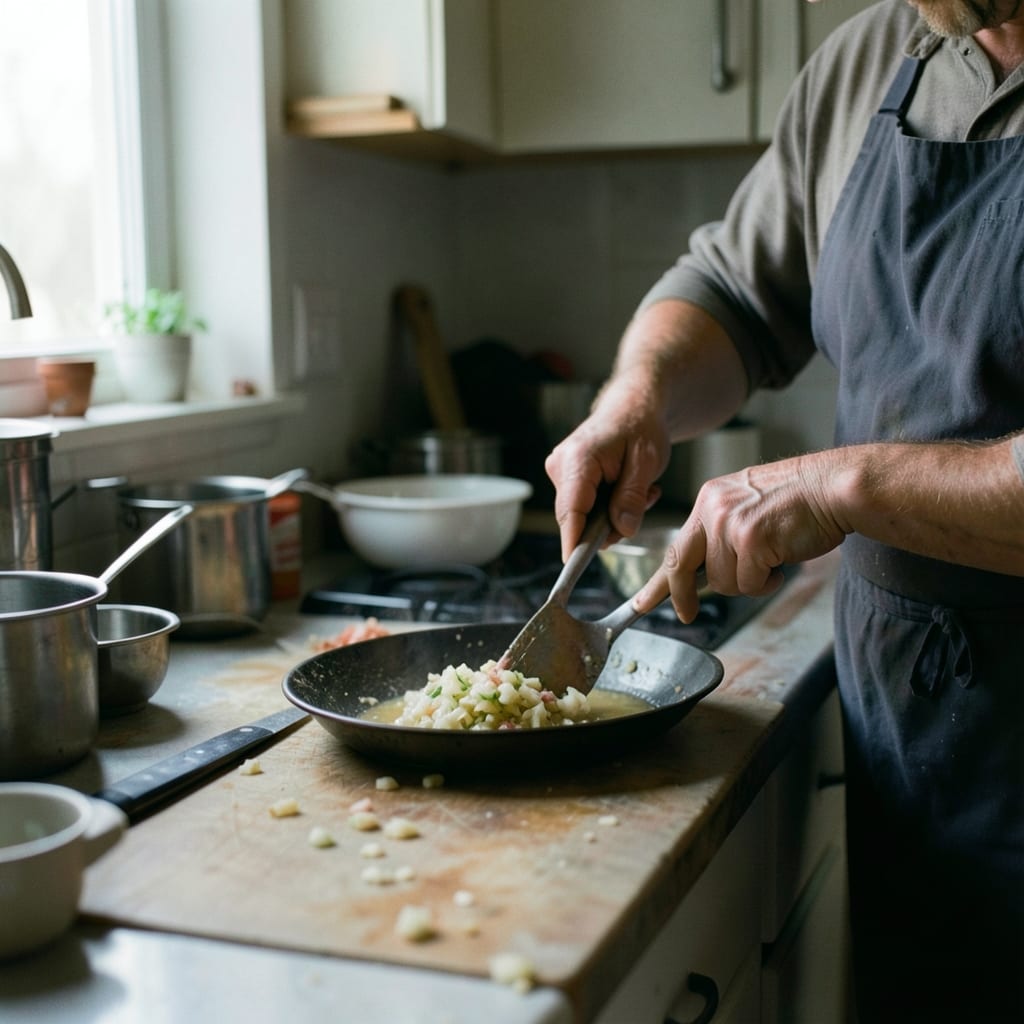
It was a Tuesday evening, and I was chopping onions for a pot of gumbo—something my mother had made a thousand times—when I realized I didn’t know why the roux turned from golden to nutty to burnt in the span of three minutes.
I’d memorized the steps, but I’d never asked *why* the heat had to be exact, or how long I could stir before the fat stopped cooperating.
That night, I started writing down the answers, not just for myself but for anyone who’d ever stood in their kitchen wondering the same thing.
This site isn’t about perfect meals. It’s about the stories behind the cuts—the moment the knife first meets the board, the way a recipe changes when you add a pinch of doubt or a dash of memory.
If you’re someone who cooks because it feels like home, or because you’re trying to make it feel that way, then you’re in the right place. No shortcuts, no assumptions. Just the work, and the reasons it matters.
Meet the founder
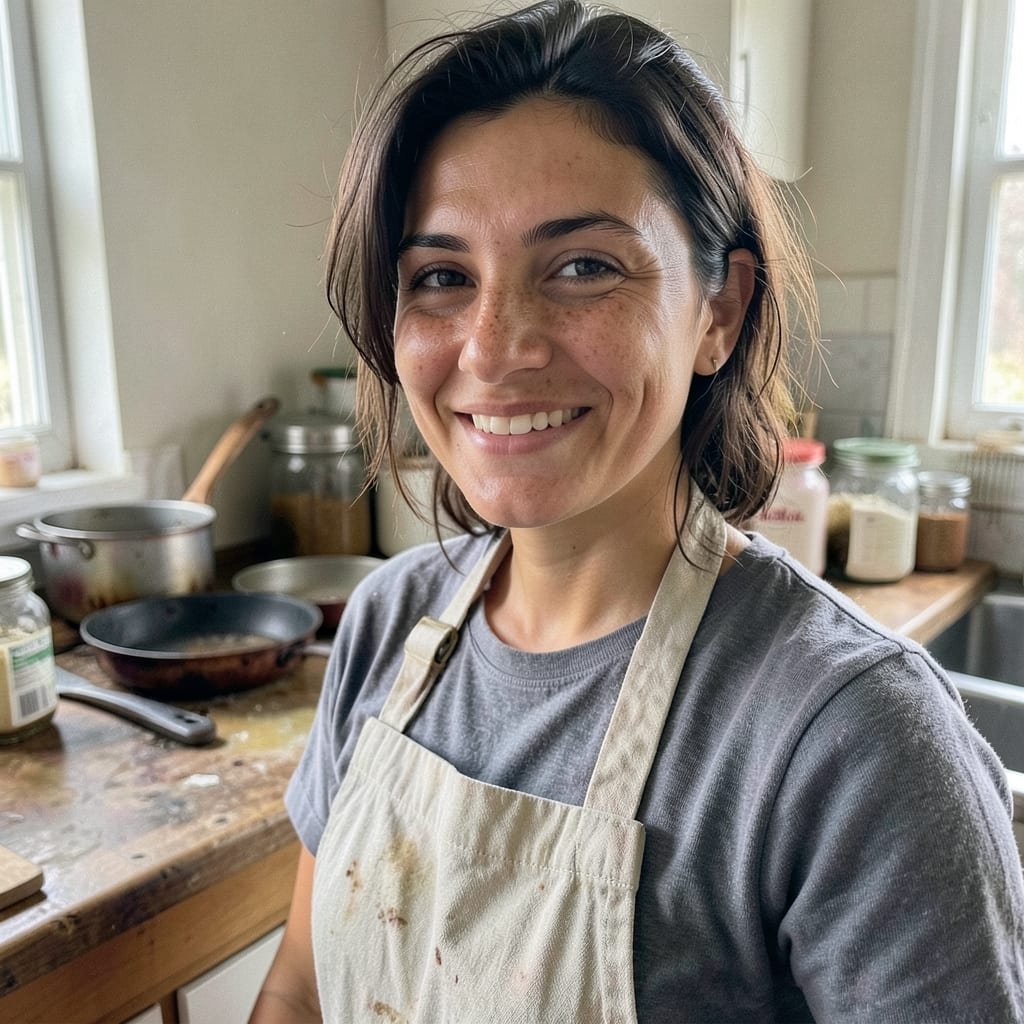
My grandmother’s kitchen was where I learned that a recipe isn’t just a list—it’s a conversation. She’d hand me a wooden spoon and say, ‘Watch the edges,’ as if the pot itself was holding its breath. The first time I burned a batch of beignets, she didn’t scold me.
She just pointed to the pan and said, ‘Next time, the oil’s ready when a cube of bread turns golden in ten seconds.’ That’s the method I still use.
The only tool I’ve never replaced is the cast-iron skillet she gave me when I moved out. It’s got a dent from the time I dropped a pot lid on it (still no idea how), and the handle’s warped from years of being pulled too hard.
But it’s the one pan I trust to sear a steak or crisp a tortilla—because it remembers the heat better than I do.
The failure that changed everything was a batch of pho. I’d followed the recipe exactly, but the broth tasted flat. Turns out, the star anise had been sitting in the spice rack for two years. After that, I started tasting spices the moment they hit the pot.
If they didn’t sing, they weren’t staying.
I still hum while I cook. Not because it’s pretty, but because it keeps me from rushing. My mother used to do it too, and I’ve never met a dish that didn’t come out better when the hands moved slower than the mind.
‘A recipe is just a starting point. The rest is what you bring to it.’ —Rosalind Baptiste, age 12, after her first (and only) attempt at baking bread.
Granny’s kitchen table, 1998
Meet the mascot
It started on a legal pad at a diner in New Orleans, where the waitress had scribbled ‘#12’ on my coffee cup and I’d spent twenty minutes trying to draw a knife that looked both sharp and friendly.
The first attempt had a blade that curved like a crescent moon—until I realized it looked more like a crescent roll than a chef’s knife.
The second version had too many lines, so I simplified it down to three: the blade, the handle, and the shadow it casts on the cutting board.
The name came later, when I was testing the drawing on a browser tab. ‘Pier’ felt right—like the first cut into something whole. And ‘recipesfork’ was just the obvious way to finish it. It’s not a logo.
It’s a reminder: every dish begins with a story, and this one starts with a knife.
What I promise you
You’ll never find a recipe here that’s been copied without testing. If it’s worth writing down, it’s worth making twice—once to get it right, once to make sure it stays that way.
What you can hold me to
- Every ingredient list includes substitutions for what you *actually* have in your pantry (yes, even the ‘optional’ ones).
- The notes section answers the questions you didn’t know you had—like why a dish needs to rest, or how to fix it if it doesn’t.
- If a recipe says ‘30 minutes,’ it means 30 minutes of active work, not ‘until you’re bored.’
- The photos are taken in real kitchens, not studios. The light is the same as yours—sometimes harsh, sometimes golden.
How I create a recipe
A recipe here doesn’t begin with a book or a blog. It starts with a question—usually mine, but sometimes yours. Why does this dish work? What happens if you skip a step? How does it change when you’re cooking in a small apartment vs. a farmhouse kitchen?
The first draft is always messy: a list of ingredients, a timeline of what I did (and what I messed up), and a notebook full of scribbled notes about textures and flavors.
The first cut
The knife meets the board at a 20-degree angle, and the first slice is always the hardest—because that’s when you’re still deciding whether the ingredient is ready. With onions, it’s when they yield with a *thwack* instead of a *squeak*. With herbs, it’s when the stems snap cleanly.
If the knife fights you, you’re either too early or too late. The timer isn’t the boss here; the food is.
I measure twice, but I taste once. That first bite is the real test: does it sing? Does it whisper? Or does it need more time, more heat, or a completely different approach? The clock can wait. The dish can’t.
The fix
This is where the magic happens—or the work, depending on how you look at it. A roux that’s gone from peanut butter to charcoal gets rescued with a splash of cold water. A sauce that’s too thin needs a cornstarch slurry, stirred in fast enough to avoid lumps.
The rule is simple: if it’s wrong, there’s a step you missed. The question is, which one?
I’ve learned to trust the senses over the recipe. If the garlic smells too sharp, it’s raw. If the stock tastes metallic, it’s boiling too hard. And if the dish looks perfect but tastes flat?
That’s when you go back to the first cut—and ask why the knife didn’t do its job the first time.
How a page gets onto this site
The desk is where the recipe becomes a story. While the pot simmers, I jot down not just the steps but the *feel* of them: the sizzle of bacon, the way a dough stretches under your fingers.
The first draft is always too long—so I cut the fluff, the assumptions, the ‘you’ll know it when you see it’ moments. What stays is only what you need to make it work.
A page gets rewritten months later if someone sends me a photo of their version and says, ‘This isn’t what I expected.’ That’s when I go back to the desk, re-test, and ask: did I miss something? Was I wrong?
And if so, how do I fix it so it’s right for *you* next time?
Write to me
I love hearing about the dishes you’ve made—or the ones you’ve ruined (we’ve all been there). Tell me what worked, what didn’t, or what you’d change if you could.
And if you’ve got a recipe that’s been in your family for generations but no one knows why it’s ‘supposed’ to be made that way, I’d love to dig into the story behind it.
The contact page is where you’ll find me. No questions are off-limits, no recipes too strange or too simple. Just bring your curiosity—and maybe a photo.
The recipes are grouped by category: Appetizers, Beverages, Breakfast & Brunch, Desserts, Main Courses and Reviews.